
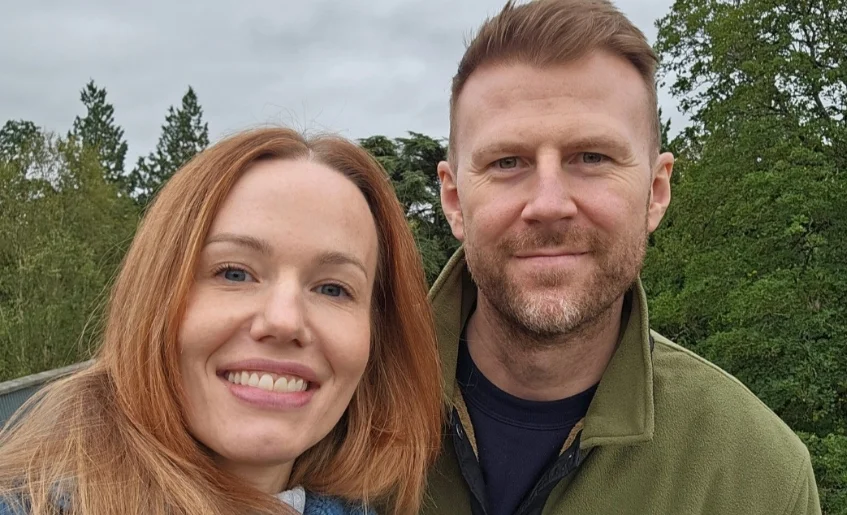
In 2020, 38-year-old John was diagnosed with stage 4 bowel cancer that had already spread to his liver. His wife, Liz, remembers how quickly life changed.
John was given a pretty grim prognosis. We went from being a family of four with a normal life to having our whole world turned upside down.
John began treatment – surgery, chemotherapy and radiotherapy – and at first, he responded well.
We had good days and bad days, good scans and not-so-good scans. The hardest part was going through all that treatment, watching how much it took out of John and all of us, while knowing he would never get better. We were living through something horrific, but with the same outcome waiting for us at the end regardless.
Suddenly, Liz found herself holding everything together, emotionally, practically and financially, while trying to protect their children, Henry, who was six at the time, and Rose, who was three.
Everyone quite rightly focuses on the patient. But we were all going through it. Our lives changed too. It was incredibly hard, but we worked so hard to keep things steady for the children and give them as normal a childhood as we could. They still went to birthday parties. We went on holidays. That sense of normality is what kept us going.
With the support of family and friends, they coped for a couple of years. But as time passed, the emotional strain deepened.
About four years after John’s diagnosis, the anticipatory grief became overwhelming. I could see the children were struggling. I tried to find support but there wasn’t much out there. Someone in an online group suggested contacting our local hospice and said it didn’t have to be scary. But that’s easier said than done. Reaching out felt like acknowledging where we were in John’s illness, and that was a huge step.
In 2024, John began accessing the Patient & Carer Wellbeing Service at The Myton Hospices, and the whole family started counselling.
After getting in touch with Myton, I remember thinking, ‘Wow. This is real help.’ Myton became a safety net. For the first time in a while, I felt we weren’t doing this alone.
Through the Wellbeing programme, John received physiotherapy. The family attended group counselling, and Rose, then eight, continued with one-to-one sessions.
I remember sitting in reception during one of Rose’s appointments, worrying about everything. I asked the volunteer at the desk who I could speak to, and by chance Tim, the Therapy Services Lead, and another colleague were walking past. They stopped and talked it through with me there and then. It lifted such a weight. I wasn’t fighting for support – it came to me.
Rose’s relationship with her counsellor helped transform how she saw the hospice.
She feels safe and happy at Myton. I knew there would come a time when John might need to be admitted, and knowing Rose wasn’t frightened of Myton meant more than I can say. She even once said she couldn’t wait for Daddy to go there properly. That innocent comment says everything about the environment – it wasn’t scary to her.
In November 2025, John was told his liver was too weak to continue chemotherapy. After a difficult hospital stay, Liz knew exactly what she wanted.
We spoke to John’s Wellbeing Nurse, Jill. She was a lifeline. Someone who listened, who checked in, who didn’t leave us to navigate this alone. She genuinely cared.
Liz was clear that she didn’t want John to come home from hospital.
I didn’t want our home to become associated with trauma. I was anxious about what might happen if he was in pain and I couldn’t help. He was also experiencing delirium and there was no way I could manage on my own. I’m so grateful a bed at Myton was available.
When we arrived, it felt like a breath of fresh air. It took me a few days to defrost. In hospital, I’d had to fight for basic care and was doing much of it myself. At Myton, the care is calm, consistent and compassionate. I remember crying with relief. The nurses took charge of John’s personal care so I could focus on being his wife again. I was always confident he was in safe hands.
That first night, the team encouraged Liz to go home to rest. In the early hours, her phone rang.
I woke up thinking the worst. But they immediately reassured me – John was asking for his phone. They’d promised him they would call me, and they did. It sounds small, but it meant everything. They listened to him and followed through, even about something that wasn’t medical.
After a few days, John began to come out of his delirium.
I don’t know if it was the pain management, the environment, or both, but he came back to us. I thought we’d already lost him. When we were first admitted, doctors had told me to prepare the children. Then suddenly, we had more time. It felt like living everyone’s impossible wish – more days with someone you love. I decided then that I would make every day count. There have been hard days, of course. But you can’t put a price on this time.
During their time at Myton, both John and Liz spoke with the Spiritual Care team.
I’m not religious, but those conversations helped me find hope in different ways. John had been carrying so much about dying and felt he could only share it with me. That was really heavy. Being able to talk openly with someone else helped him, and helped us.
The hospice team continually looked for ways to support the family beyond medical care. They introduced them to a cuddle bed – a hospital-grade bed that extends to the width of a double, allowing families to lie together.
We didn’t have to ask for anything. People thought about what might help and brought it to us. They moved us to a larger room so we could have the cuddle bed. We also made a hand-cast with John and Rose which was incredibly special. Someone suggested a family movie night and the Day Unit was set up with a screen and comfy chairs, we ordered pizza and watched Men in Black. Henry finds it hard coming to the hospice and seeing his dad so unwell, so that evening meant everything.
We even went out to Coombe Abbey Park using a special wheelchair. We hadn’t been outdoors together in so long. John doesn’t always like the wheelchair, reminding him of what he’s lost, but that outing lifted him.
Liz and Rose have also stayed in the relatives’ accommodation to remain close to their husband and dad.
Having that room is invaluable. It was so important for us to be near him. We want to be together, and Myton helps facilitate that, giving us freedom to do whatever we want. My sister brought her baby to see uncle John and it’s just such a nice environment for everyone. I have also had a few sessions with Jen from the Complementary Therapy team. She has really helped me find small moments to recharge my batteries, which makes such a difference in being able to support John. Jen is a lovely person with a heart of gold and goes above and beyond for everyone – just having people like her around is such a comfort.
Reflecting on their time at Myton, Liz is clear about what stands out most.
It’s the people. Every doctor, nurse, nursing assistant and volunteer, they’re extraordinary. You see a nursing assistant sitting with a patient, just giving them time. Those small acts matter. After more than two months here, they know me as well as they know John. They can tell if I’m having an off day. You see the very best of humanity in a place like this.
Hospice care is centred on respect, privacy and dignity. It’s about listening to what matters most to patients and families. It honours individuality and supports your wishes, even when it’s not easy.
Of course there have been painful moments. But having this time with John makes it much more bearable.
John was admitted to Coventry Myton Hospice in early January 2026, where he was cared for during the final 10 weeks of his life.